What the Salary Range Actually Says: Reading AI Pay Bands Under New Transparency Laws
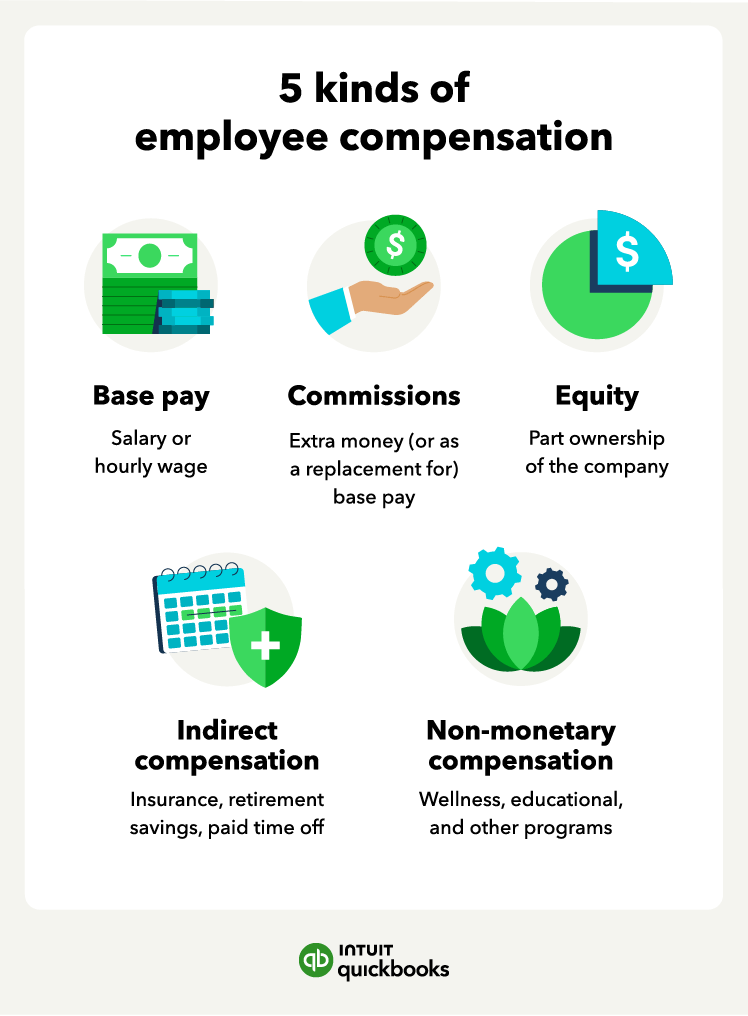
Photo: compensation analyst reviewing salary benchmark charts on dual monitors, via quickbooks.intuit.com
Open almost any AI job posting based in California, Colorado, New York, Washington, Illinois, Minnesota, Massachusetts, or New Jersey and you will now find a number you did not see five years ago: a salary range, printed in public, before you have spoken to anyone.
The shift is the cumulative result of state legislation passed between 2021 and 2025, and by 2026 disclosure has become the default expectation across most of the country's major tech labor markets rather than a quirk of a few progressive employers. That is genuinely useful information. It is also information that is easy to misread.
A Patchwork That Now Covers Most of the Map
The rules are not uniform, and the differences matter. Some states require a range in every posting. Others require it only after an initial interview or upon request. Several exempt employers below a certain headcount. Remote roles create their own jurisdictional puzzles: Colorado and California generally apply their rules when a position can be performed in the state, which means a Boston company hiring a fully distributed engineer may still owe candidates a disclosed band.
New York's rules apply to employers with four or more employees; smaller startups may fall outside them. Illinois and Minnesota, whose laws took effect in early 2025, cover employers above lower thresholds and require disclosure in the posting itself. Vermont and Massachusetts joined the list later in 2025. Hawaii and Maryland have their own variations.
The practical takeaway for a job seeker is that a missing range no longer reads as neutral. In a market where most competitors disclose, an employer that publishes nothing — or posts a band so wide it spans three levels — is telling you something about how it thinks about compensation.
What a Band Is, and What It Is Not
A disclosed range is a good-faith estimate for a role, not a promise. It typically covers one job level at one company, though many employers merge two adjacent levels into a single band to avoid rewriting postings for every hire. It almost never includes equity, and in many states it excludes bonus targets, signing bonuses, and relocation.
That distinction is where most candidates lose money. A $190,000 to $260,000 base band at a public company with a meaningful RSU program is a different offer, in real terms, from the same band at a seed-stage startup issuing options at an illiquid strike price.
Three Numbers Worth Extracting
Read every band three ways.
The floor tells you the minimum the company will pay someone it considers qualified. If an offer arrives below it, either the level is different from what was posted or the employer is treating the disclosure loosely. Both are worth a conversation.
The midpoint is the most reliable anchor for negotiation. Most compensation teams build bands around a market midpoint, and an offer near the middle of a published range for your level is, in most cases, a fair offer rather than an opening bid.
The spread — the ratio of ceiling to floor — reveals structure. A spread of roughly 1.3x to 1.5x is typical for a single level. A spread above 1.8x usually means two levels have been collapsed into one posting, a role is being defined as it is hired, or the company is hedging because it has not decided what seniority it can afford.
Recognizing an Inflated Range
Some ranges are technically compliant and substantively useless. The tells are consistent: the same band appears verbatim across every posting from the company, from new grad to staff; the ceiling sits far above what comparable roles pay elsewhere; the range is identical across three time zones with no geographic differential noted.
None of that makes the employer dishonest. It does mean the number should not drive your expectations. Cross-check against at least three comparable postings at similar-stage companies in the same metro before you treat a ceiling as an achievable figure.
The Geography Question
Many national employers publish a single band and then apply location adjustments at offer stage. If the posting does not state whether the range is national or metro-specific, ask early — before the final round, not after. A question phrased as "Is this range reflective of the New York market, or is there a location differential?" is entirely reasonable and signals that you read carefully.
Where the Equity Lives
Disclosure laws concentrate on base salary, which means the most variable part of an AI compensation package often remains opaque. Ask for the grant in dollar value, the vesting schedule, the strike price, and — for private companies — the most recent 409A valuation and preferred price. Ask how refreshes work and what percentage of employees received one last cycle. These questions are routine at serious companies and revealing at careless ones.
Using the Data Without Overplaying Your Hand
Cite the midpoint, not the ceiling, when you open a negotiation, and attach it to evidence: a competing offer, a documented scope difference, or a level above the one posted. Ask which level within the band the company intends to hire at — that single question often resolves an apparent gap before it becomes a dispute. And ask for the band and level in writing once an offer is extended.
Ranges are a starting dataset, not a verdict. Used well, they remove the guesswork that once defined AI compensation conversations. Used carelessly, they create the illusion that the ceiling is the offer.